

Development of Energy Storage Battery Cells
Recently, there have been reports about Sunwoda's successful delivery of 1 million units of 684Ah laminated battery cells.
Since the mass production of 280Ah cells began, product iterations and developments have continued. As of now, the announced cell capacity has reached 1175Ah, represented by Haichen's long blade cell. The timeline is as follows:
-
2019: Mass production of 280Ah cells.
-
2022: Mass production of 306Ah cells.
-
2023: Mass production of the 314Ah cell, independently defined by Sungrow, alongside the launch of their integrated AC storage system, Powertitan2.0, featuring a 5MWh 20-foot battery container.
-
2024-2025: Emergence of various cell specifications, including:
-
Sungrow defined a cell specification of 684Ah using lamination process, with Sunwoda and CALB as representative manufacturers.
-
Huawei defined a cell specification of 588Ah.
-
The cell giant CATL defined a cell specification of 587Ah using winding process.
-
Haichen defined specifications of 588Ah and a long blade cell of 1175Ah.
-
EVE Energy defined specifications such as 648Ah, 628Ah, and 700Ah.
-
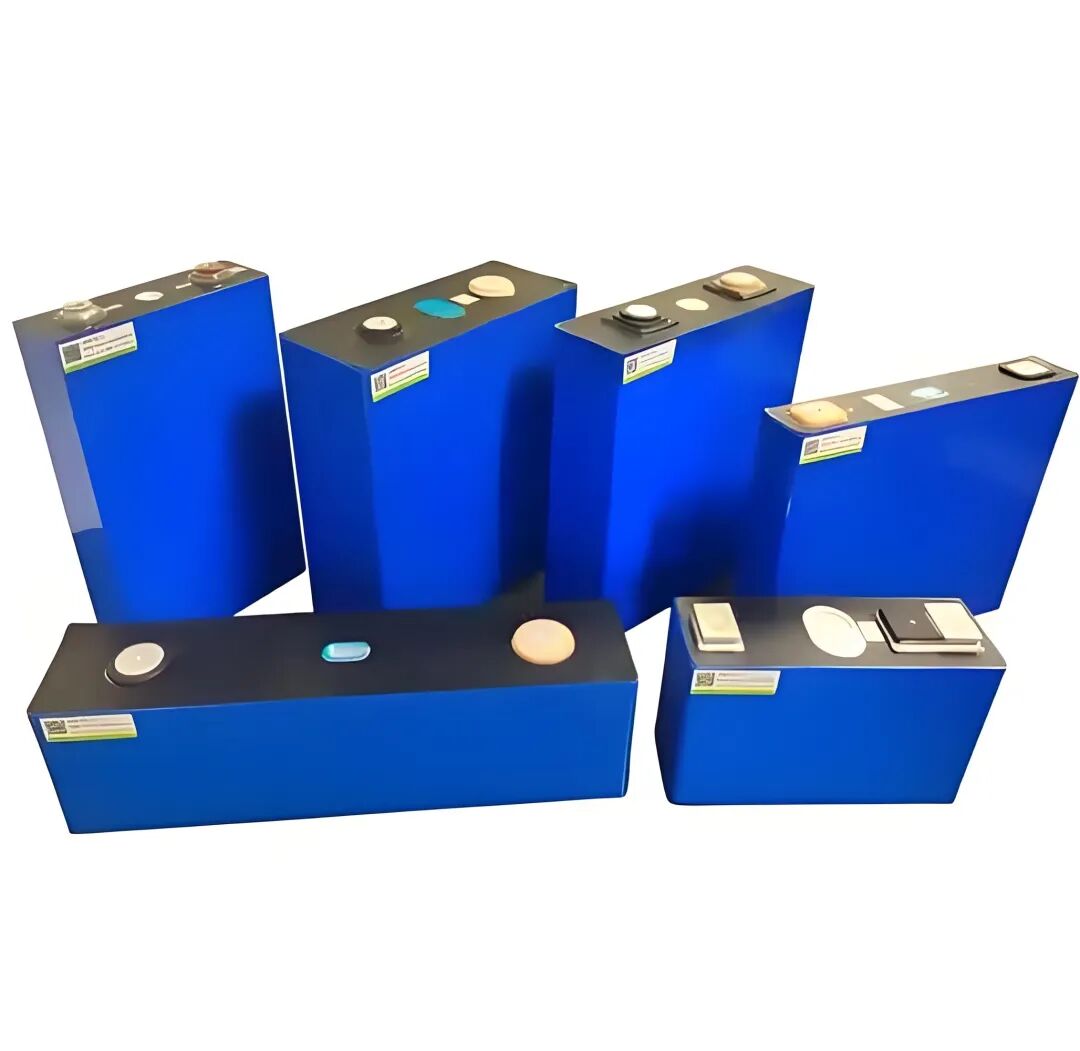
By the end of 2025, various cell manufacturers and energy storage system integrators had launched battery containers with different capacities, such as 7MWh, 6.25MWh, and 6.9MWh. However, the cell specifications that gained the most attention were the 588Ah and 684Ah, which were customized by non-cell manufacturers.
For capacities below 500Ah, the winding process is mature, safe, reliable, and efficient. However, for capacities above 500Ah, the increase in cell thickness and width poses challenges for winding. The winding process involves sequentially winding the positive electrode sheet, separator, and negative electrode sheet, followed by compression molding. This can easily lead to stress concentration at the corners, significantly increasing the risk of cracking and fracture. Consequently, this raises the risks of lithium plating, internal short circuits, and even thermal runaway.
In contrast to winding, the 684Ah cell adopts the lamination process route, representing a technical choice with higher performance, longer cycle life, and superior safety. It also indicates the developmental direction for large-capacity cell manufacturing. The lamination process assembles the electrode sheets and separator in a layered stack, eliminating the wasted space associated with R-angles and allowing for more uniform arrangement. This significantly improves energy density while, due to more uniform internal stress and lower expansion rate, greatly reducing the safety risks of the cell during cycling. Each electrode layer has an independently tabbed terminal. Compared to the half-tab design of wound cells, this results in lower internal resistance and more uniform heat dissipation, also contributing to higher charge/discharge efficiency and longer service life for the cell.
The safety and reliability of an energy storage system depend not only on the inherent safety and reliability of the cells themselves but also significantly on the system integration.